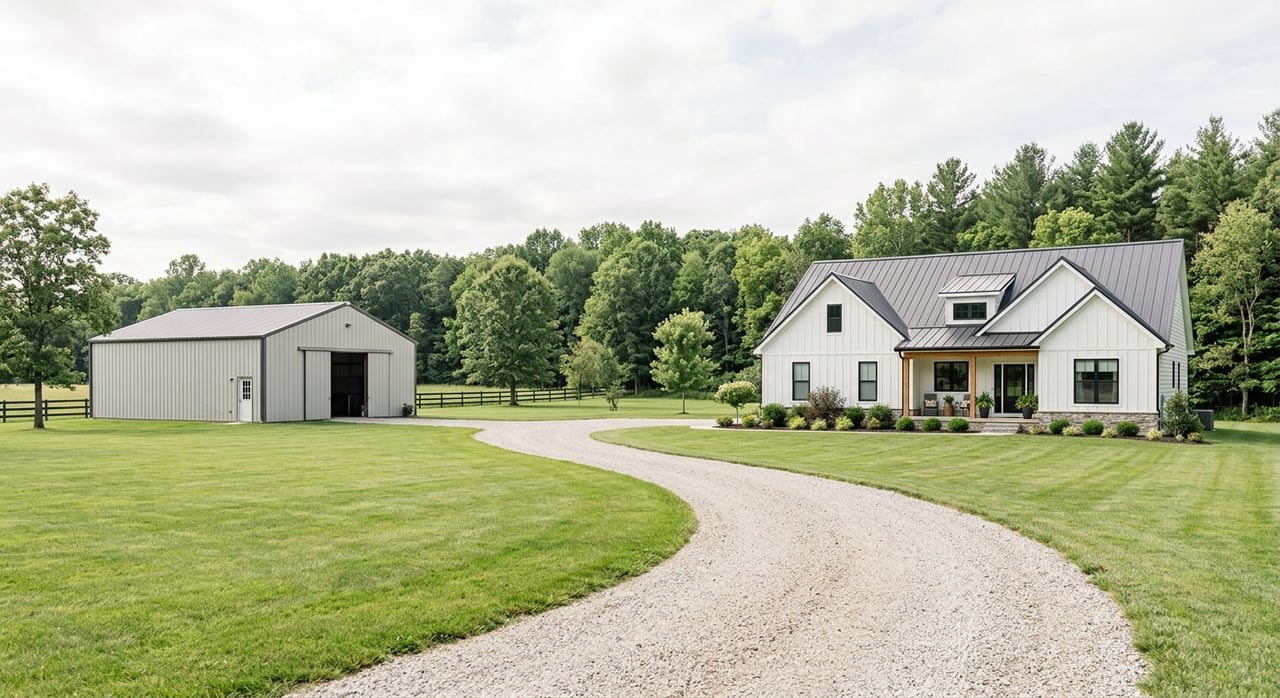
Dreaming about a little more elbow room near Dundas? Acreage can offer privacy, flexibility, and space for hobbies, but it also comes with more moving parts than a typical in-town home search. If you are thinking about buying land with a house, room for outbuildings, or future hobby-farm use, it helps to know what to check before you fall in love with a property. Let’s dive in.
Start With Zoning and Jurisdiction
One of the biggest mistakes acreage buyers make is assuming the land can be used the way it looks like it should be used. Near Dundas, rules may come from the City of Dundas, the city’s Annexation Reserve District, or Rice County and township jurisdiction, depending on the parcel.
That is why your first step should be confirming who governs the property and what zoning district applies. Dundas has several zoning districts and overlay districts, including residential, rural-service, floodplain, wetland, and planned-unit-development overlays. Before you make plans for animals, a pole building, or future improvements, review the zoning map and applicable ordinances.
For some parcels near Dundas, the Annexation Reserve District, often called the ARD, is especially important. In that district, a building permit is generally required before erecting, altering, converting, removing, or demolishing structures. The code also requires administrative review to confirm that a parcel is buildable and that the intended use conforms to local rules.
Understand What the Parcel Can Support
Acreage often feels simple on the surface, but the details matter. A parcel that looks perfect for a barn, extra garage, or small animal setup may have rules that limit what you can actually build or how you can use the land.
In Dundas residential zoning, detached accessory buildings are limited to no more than two, with a combined cap of 1,400 square feet and no single structure over 1,000 square feet. In some NRSF and LDSF districts, additional flexibility may be possible through conditional use review.
If you are looking at a larger rural parcel, agricultural structures may be treated differently. In the ARD, an agricultural structure permit can apply to new agricultural buildings or additions on parcels of at least 10 acres when those buildings are used exclusively for agricultural storage, equipment, or animal housing.
That distinction can make a big difference if your goal is a hobby-farm style property. The size of the lot, the zoning, and the intended use all work together, so it is smart to verify those details early instead of after an offer is accepted.
Animal Use Needs a Closer Look
If your acreage plans include keeping animals, even on a small scale, local rules still matter. Buyers sometimes assume a few hens or other small animal uses are automatically allowed on any property with extra land, but that is not always the case.
In Dundas, limited chicken keeping is allowed only under specific conditions. The property must have a single-family home, the owner must live there, no more than five hens are allowed, roosters are prohibited, and the chickens must stay within required enclosures and rear-yard setbacks.
If animal use is important to you, ask questions before you tour too far down the path. A property’s location, zoning, and permit history can all affect whether your plans will work.
Wells and Water Records Matter
With acreage, private wells are a major part of due diligence. Minnesota requires well disclosure before the seller signs a purchase agreement, and that disclosure applies to many types of wells, including drinking, irrigation, livestock, heating and cooling, and monitoring wells.
That matters because older rural properties may have more than one well on site. As a buyer, you should ask for well construction records, sealing records, water-testing reports, repair or maintenance records, and any prior well disclosure certificates.
It is also important to know that Minnesota does not require private well water testing at transfer, although lenders often do. The Minnesota Department of Health recommends annual testing for total coliform bacteria and nitrate, plus at least one arsenic test and one lead test at the tap.
Older wells can still be lawfully disclosed even if they do not meet current well-code standards. That is one reason water records and site review are so important. You want to know not just that a well exists, but how it has been maintained and whether its location raises concerns.
Septic Should Never Be an Afterthought
Septic systems deserve the same level of attention as wells, and sometimes more. Minnesota does not require a septic compliance inspection before every property transfer statewide, but local ordinances may require one, especially in shoreland areas.
The seller’s septic disclosure should explain how sewage is managed, include a map of the system if present, and state whether the system is in use and, to the seller’s knowledge, compliant with applicable laws and rules. That mapping requirement also applies to abandoned septic systems.
For acreage near Dundas, septic history can be especially important because on-site sewage disposal in the ARD must comply with Minnesota Rules Chapter 7080 and the county sewage and wastewater treatment ordinance adopted by the city. If a property feels rural but falls under city-related controls, permit and repair records become even more valuable.
You should also confirm whether any septic work was handled by properly licensed professionals. The Minnesota Pollution Control Agency states that private businesses that design, install, repair, maintain, operate, or inspect septic systems must be licensed.
Check Buildability Beyond the House
Acreage buyers often focus on the home first, then the land second. In reality, the land itself may shape what is possible more than the house does.
In the ARD, site suitability review can consider flooding, wetlands, severe soil limitations, erosion risk, slopes greater than 18 percent, water supply or sewage-treatment capability, endangered species, habitat, historic sites, and the presence of woods or grasslands. That is a long list, but it tells you something important: not every attractive parcel is easy to improve.
Rice County’s public GIS layers can help with early screening. Buyers can use county mapping tools to review zoning, floodplain, wetlands, soils, parcels, roads, township boundaries, and lakes and streams before making assumptions about what a site can support.
This step can be especially helpful if you are comparing multiple properties. A parcel with better soil, clearer access, and fewer environmental constraints may be the better long-term fit, even if another listing looks more appealing at first glance.
Access Can Make or Break an Acreage Purchase
Long driveways and rural road frontage can look charming, but access is one of the most important practical issues to verify. In the ARD, new driveways or changes in driveway use require a permit.
Approval can also depend on which road serves the property. County-road driveway access must be approved by the county’s Highway Engineer and Planning Director before development, township-road access is regulated by the Planning Commission, and state-highway access requires state approval.
Driveway standards matter too. Residential driveways in the ARD must have an all-weather surface, be at least 12 feet wide, and for longer drives include a 45-foot turning radius or turnaround. The driveway must be built before a certificate of occupancy and continuously maintained.
Rice County’s road-shield mapping layer can also help you confirm whether the road is federal, state, county, city, township, or private. That can affect access approvals, maintenance expectations, and future road questions.
Financing Acreage Is Not Always Standard
Acreage financing can be different from financing a typical subdivision home. Even when the property includes a house, lenders may look more closely at land use, outbuildings, access, and whether the property is primarily residential.
For eligible buyers and qualifying rural properties used as a primary residence, USDA Section 502 Guaranteed Loan financing may be an option. USDA states there is no set acreage limit for a site with a dwelling as long as the property meets program rules.
Conventional financing can be more restrictive. Fannie Mae says it does not purchase mortgages on vacant land, properties used primarily for agricultural or commercial purposes, properties that are not readily accessible by roads meeting local standards, or properties that are not suitable for year-round occupancy.
That does not mean an acreage property cannot be financed conventionally. It does mean you should ask your lender early whether the property is likely to be treated as a standard residence, a mixed-use property, or something that may need portfolio financing.
Appraisals May Take More Time
Appraising acreage near Dundas can also be more complicated than appraising an in-town home. Rural properties often have fewer truly comparable sales, and the available comps may be farther away, older, or less similar.
Fannie Mae’s rural appraisal guidance notes that this can lead to larger-than-usual adjustments. For you as a buyer, that may affect value conclusions, underwriting timelines, and how much flexibility you want built into your offer strategy.
This is one more reason organized preparation matters. When you understand the zoning, use, permits, access, and utility setup early, you are in a much better position to choose the right property and move through the purchase with fewer surprises.
Smart Questions to Ask Early
Before you schedule inspections or write an offer, it helps to gather the right information. A few well-placed questions can save you time, money, and stress.
Ask the seller about:
- Well disclosure statements and any well records
- Water test results and maintenance history
- Septic disclosures, permits, pumping records, and repairs
- Surveys, easements, driveway permits, and outbuilding permits
- Any current or past nonresidential use, including animal housing or business use
Ask inspectors or specialists about:
- The location of the well, septic tank, drain field, and any abandoned or unused wells
- Signs of flooding risk, contamination concerns, drainage issues, odors, or septic failure
- Whether the driveway, barns, sheds, or other structures appear to match permit history and local rules
Ask your lender about:
- Whether the property may qualify for USDA, conventional, or portfolio financing
- Whether acreage, outbuildings, or animal use may affect underwriting or appraisal
- Whether extra documentation or a rural appraiser may be needed
Ask the city, county, or township about:
- Which jurisdiction controls the parcel
- What zoning and overlay districts apply
- Whether the parcel is in a floodplain, wetland area, or mapped roadway corridor
- What permits may be required for driveways, structures, septic work, or well work
Buying acreage near Dundas can be incredibly rewarding when you go in with clear eyes and the right local guidance. The best properties are not just beautiful on paper. They also line up with your goals, your budget, and the practical realities of zoning, water, septic, access, and financing. If you want a grounded, organized approach to sorting through acreage options in Dundas and the surrounding Rice County area, Megan Culhane is here to help you move forward with confidence.
FAQs
What should you check first when buying acreage near Dundas?
- Start by confirming the property’s jurisdiction, zoning district, and any overlay districts so you know what the parcel can legally support.
Does Dundas allow large outbuildings on acreage properties?
- It depends on the parcel’s zoning and size. Residential-zoned lots have accessory-building limits, while some 10-acre-plus parcels in the ARD may qualify for an agricultural structure permit.
Do you need to test well water when buying acreage in Minnesota?
- Minnesota does not require private well testing at transfer statewide, but many lenders do, and the Minnesota Department of Health recommends regular testing for coliform bacteria, nitrate, arsenic, and lead.
Is a septic inspection required before buying acreage near Dundas?
- Not in every transaction statewide, but local ordinances may require inspections in some cases, so you should verify local requirements and review all septic disclosures, maps, permits, and repair records.
Can acreage near Dundas qualify for USDA financing?
- Some properties may qualify if they meet USDA location and program rules and will be used as a primary residence.
Why are acreage appraisals different from suburban home appraisals?
- Rural properties often have fewer comparable sales, and the available sales may be farther away or less similar, which can make valuation and underwriting more complex.